A 10000K headlight bulb might seem like it should be twice as bright as a 5000K bulb, but that’s a common misunderstanding. The Kelvin (K) rating measures color temperature—not brightness. What it actually influences is the hue, tone, and overall visibility of the light.
Because many drivers aren’t familiar with how color temperature works, it’s easy to end up with LED bulbs that produce a light tone unsuitable for your needs.
In this guide, we’ll clarify the theory behind color temperature and why it matters for your LED headlight choice. We’ll also break down the most common LED headlight color temperatures and help you decide which one is right for your vehicle.
What is LED Headlight Color Temperature?
Measured in Kelvins (K), color temperature defines the color appearance of light—from warm yellow to cool blue. Importantly for LEDs, this scale describes visual hue, not the actual heat the bulb emits.
Origins of Color Temperature
Color temperature is a scientific concept rooted in the principle of thermal radiation. It is defined by the light emitted from a theoretical “black body radiator” as it is heated to different temperatures. We can observe a practical approximation of this by heating a piece of metal: it first glows a dull red, then progresses to orange, yellow, white, and—at its hottest—even a blue-white. This sequence occurs because as the object’s temperature increases, the wavelength of the emitted light shortens, shifting its color from long-wavelength red to short-wavelength blue and violet, passing through all intermediate hues.
Range of Color Temperature
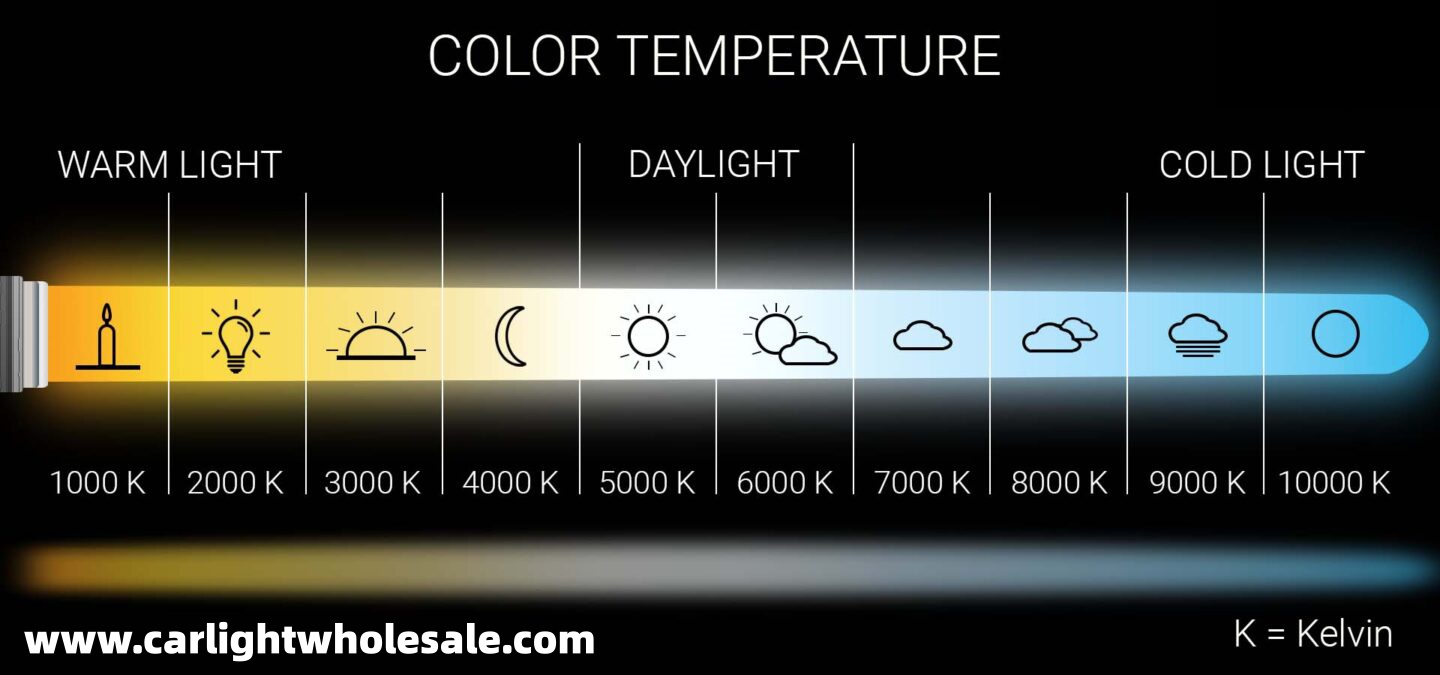
The Kelvin scale, ranging from about 1000K to 12000K, quantifies the color of white light. At the warm end, 1000K emits a deep red glow, far below typical automotive use. At approximately 2500K, the light takes on an orange hue, transitioning to the pale yellow of standard halogen bulbs (2800K-3000K). As temperatures rise, the color shifts through neutral white around 5600K. Beyond this point, a blue tinge becomes apparent, as seen in common 6000K-8000K aftermarket headlights. At the extreme end of the scale, 10000K produces a pure blue light and 12000K appears violet, though these colors are rare and impractical for functional vehicle lighting.
How LEDs Create Different Colors of Light
Unlike incandescent bulbs, which rely on a super-heated filament (over 2000ºC), LED chips operate below 100ºC. So, how do they produce different colors, including the white light for headlights? The process begins with blue light. An LED chip itself generates blue light due to its specific semiconductor material. This blue light is then used in one of two ways to create white light:
-
Phosphor Conversion: The most common method. The blue light is directed onto a layer of phosphor, a material that converts some of the blue light into yellow. The resulting mixture of blue and yellow light appears as white to our eyes.
-
RGB Mixing: Less common in headlights, this method combines separate red, green, and blue LED chips to produce white light.
By precisely adjusting the phosphor composition or color mix, manufacturers can shift the white light along the color temperature scale, from a warm yellow-white to a cool blue-white.
Why Your Headlight Color Choice Matters
Selecting the right color temperature for your LED headlights is a critical safety and performance decision, affecting far more than just aesthetics.
1. Visibility & Brightness
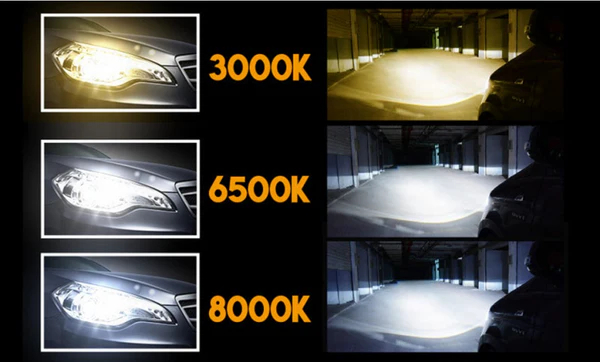
Counterintuitively, a higher Kelvin number does not mean a brighter light. The optimal range for human vision and road illumination is between 4300K and 6000K, where light appears brightest and offers the best contrast. Color temperatures significantly above or below this range (e.g., deep yellow or intense blue) actually reduce usable light output and can impair your night vision.
2. Glare for Other Drivers

Headlights with a strong blue tint (typically above 6000K) are frequently reported to cause more discomfort and glare for oncoming traffic. While studies are ongoing, the consensus is that the human eye is more sensitive to shorter blue wavelengths at night, making such lights appear harsher and more blinding.
3. Performance in Bad Weather
Shorter blue wavelengths scatter more easily when they hit particles like fog, rain, or snow. This creates a “wall of light” effect that reduces your own visibility. Longer wavelengths, like those in warmer light (3000K-4300K), scatter less and cut through adverse weather more effectively. This is the historical reason for yellow fog lights.
4. Legality
Many regions have laws regulating headlight color. In particular, deeply blue or purple lights (often 8000K and above) are commonly prohibited for road use, as they can resemble emergency vehicle lights and increase glare. Always check your local vehicle codes before modifying your headlights.
5. Aesthetics
This is the personal preference. A neutral white (5000K-6000K) offers a modern, high-tech look, while a warmer white (3000K-4300K) maintains a more traditional, OEM-style appearance. The choice should balance your desired look with the safety and performance considerations above.
A Guide to Common LED Headlight Colors
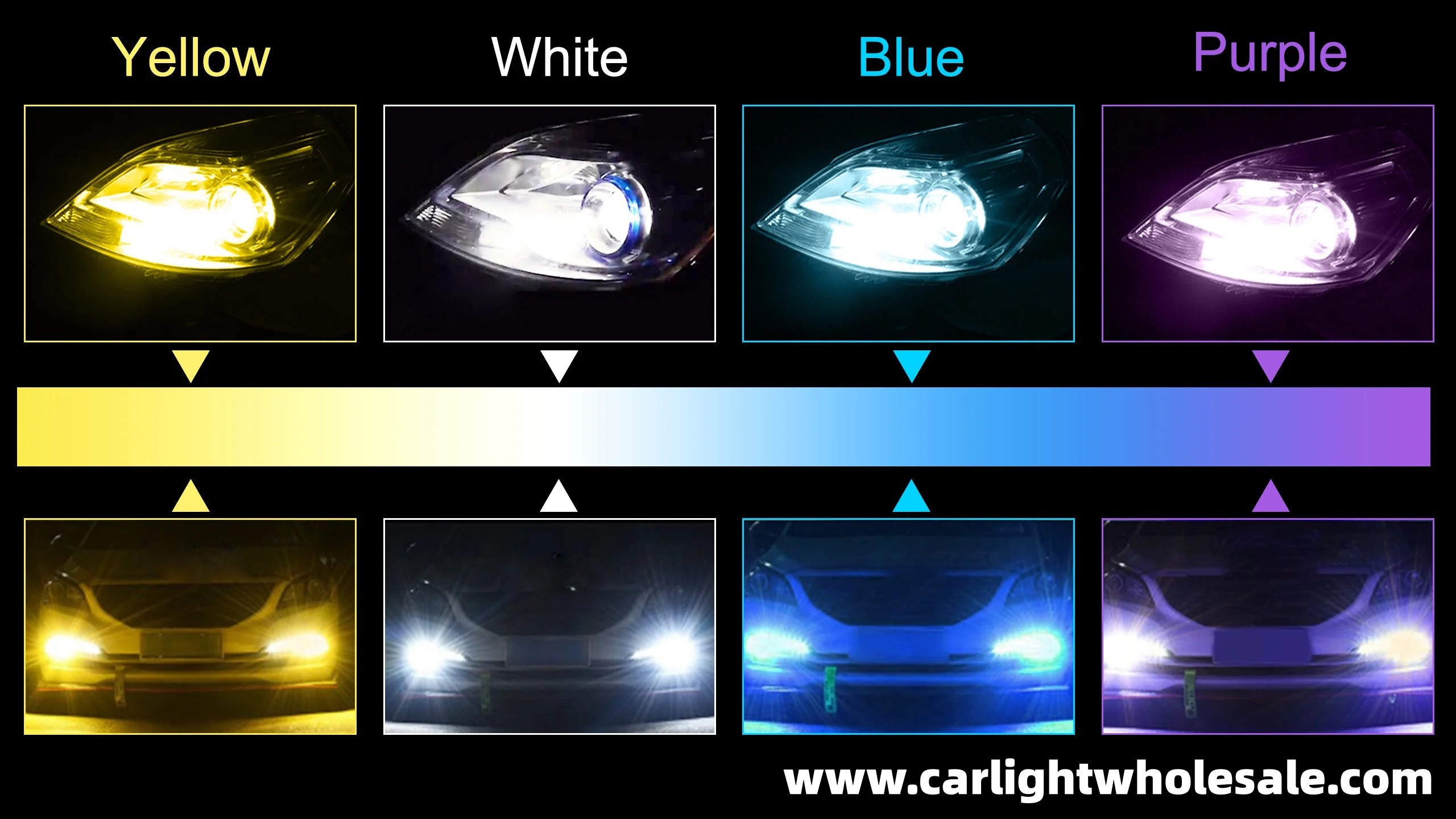
Modern LED technology offers a wide spectrum of colors for automotive lighting. In headlights, however, the practical range is narrower, with some options prioritizing style over safety. Here is a breakdown of the most common colors, their characteristics, and their ideal uses.
-
White (5000K – 6000K): This range produces a bright, neutral to slightly cool white light, often considered the optimal choice for visibility. It closely mimics midday sunlight, providing excellent contrast and clarity for nighttime driving—a performance level unattainable with traditional halogen bulbs. Most modern vehicles feature headlights in this temperature range.
-
Yellow / Warm White (3000K – 4000K): Emitting a warm, yellow hue reminiscent of classic halogen bulbs, this range is a stylistic match for vintage or classic cars. While its overall illumination is adequate, many drivers find it less effective for primary lighting than pure white. Its key functional advantage is superior performance in fog, rain, or snow, as the longer yellow wavelengths scatter less than blue light, allowing better penetration.
-
Blue (6000K – 8000K): Headlights in this range have a distinct blue tint. They offer a modern, high-tech aesthetic and provide acceptable visibility up to about 8000K. Beyond this point, the blue intensifies and visibility sharply declines. It is crucial to note that deeply blue headlights may be illegal in many regions and are frequently cited as a source of glare for oncoming drivers.
-
Purple / Violet (12000K+): This is a niche, purely stylistic choice. Lights at this extreme end of the spectrum offer very poor visibility for safe driving and are highly likely to be illegal for road use. They are intended almost exclusively for custom show cars.
Note on “Warm” vs. “Cool”: Despite the technical terms, lower color temperatures (3000K) are called “warm” for their association with firelight, while higher temperatures (6000K+) are “cool,” evoking ice or an overcast sky.
Understanding Brightness: It’s Not About Color
A key point of confusion is that a higher color temperature (more blue) does not mean a brighter light. Human eyes perceive the brightest light in the 5000K to 6000K (white) range. Visibility diminishes at both warmer (yellow) and cooler (blue) extremes.
True brightness is measured in lumens, and this is where wattage provides insight—but with a modern twist.
-
Wattage measures a bulb’s power consumption, not its light output.
-
Due to their high efficiency, LEDs produce far more lumens per watt than halogens. For example, a 45W LED can output around 9,000 lumens, while a halogen bulb of the same wattage produces under 1,000 lumens.
-
Heat is Critical: While LEDs run cooler than halogens, they are also sensitive to heat. High-wattage, super-bright LEDs require excellent built-in cooling systems (like heat sinks and fans) to prevent premature failure.
Choosing the Best LED Headlight Color
The “best” color balances objective performance with your specific needs and local laws.
-
For Maximum Safety & Visibility: Choose pure white headlights (5000K-6000K). This range offers the best illumination for the driver while minimizing harsh glare for others.
-
For Poor Weather or a Classic Look: Choose yellow/warm white bulbs (3000K-4000K). They are ideal for dedicated fog lights or to maintain the classic appearance of a vintage car.
-
For a Modern Style (With Caution): If you prefer a cool white with a hint of blue, stay within 6000K-6500K. Avoid deeper blues (8000K+) due to reduced visibility and potential legal issues. Always check your local vehicle codes.
-
Avoid for Road Use: Steer clear of purple lights (12000K+). They are unsafe for driving and typically illegal.
A Note on Consistency: Slight variations in hue can occur between batches, even for bulbs rated at the same Kelvin temperature. Purchasing from a reputable manufacturer is the best way to ensure color consistency and long-term reliability.
Conclusion
The ideal LED headlight color temperature is not a matter of actual heat but of optimized performance. While white, yellow, and blue are the most common options, the science is clear: headlights between 4300K and 6000K provide the best combination of brightness, clarity, and safety for nighttime driving.
Achieve the Perfect Light with Carlightwholesale
Searching for premium LED headlights with precise, consistent color temperature and lasting performance? Look no further than Carlightwholesale. With years of dedicated research and expertise in automotive LED technology, we provide reliable solutions tailored to your needs—whether you prioritize optimal visibility, a specific aesthetic, or both.
Explore our range of high-quality LED headlight products and find your perfect match on our website today.