Understanding Headlight Lumens: The Key to Brighter, Safer Driving
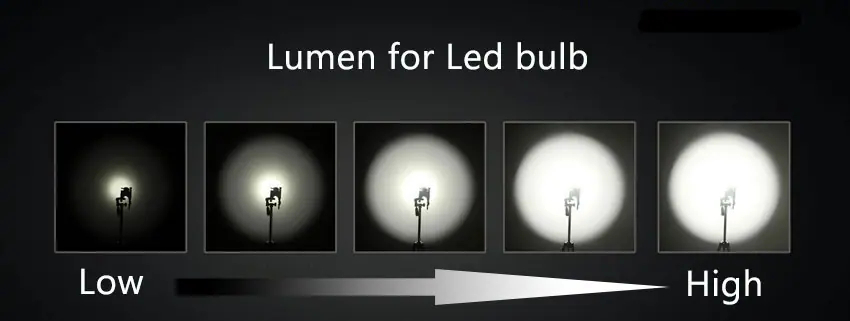
If you’ve ever shopped for or upgraded headlights, you’ve likely encountered the term lumens. Simply put, lumens measure the total visible light output of a source. For headlights, this directly translates to brightness—higher lumens mean a brighter beam. This makes lumen count a critical factor in improving visibility during night driving or in poor weather, ultimately enhancing safety by allowing you to see farther and react faster.
While brighter lights are generally better, there’s no single “perfect” number. Headlight lumens can range from around 500 for some stock halogens to well over 5,000 for high-performance HID or LED bulbs. The ideal brightness depends heavily on your vehicle and bulb type. This guide will help you understand how brightness is measured and how to choose the right light for your needs.
How Headlight Brightness is Measured
Lumens: The Measure of Useful Light
Unlike watts, which measure energy consumption, lumens measure perceived brightness. This measurement stems from luminous flux, a concept weighted to the human eye’s sensitivity—we perceive green-yellow light (around 555 nm) most brightly. Lumens account for this, giving a true picture of how effective a light source is.
This is why regulations focus on light output. In the U.S., most states mandate a minimum of 500 lumens per headlight, with many experts recommending at least 3,000 lumens for optimal road illumination.
Why Beam Pattern is Just as Crucial
Raw brightness alone isn’t enough. The beam pattern—how light is distributed on the road—is equally important. A well-engineered pattern uses the available lumens efficiently, spreading light evenly across the lane without blinding oncoming traffic. This pattern is shaped by the bulb’s design, the headlight housing, and the reflector or lens.
The right balance ensures that high lumens translate into usable light, improving your view without creating hazardous glare for others. Therefore, when choosing headlights, consider both the lumen output and the quality of the beam pattern the bulb and housing produce together.
Types of Car Headlights and Their Lumen Output
Halogen Headlights: Traditional and Common
Halogen headlights generate light by heating a tungsten filament inside a halogen-filled quartz bulb. They emit a warm-toned light with an average output of approximately 1,000 lumens, substantially less than modern alternatives. An estimated 80% of vehicles on the road still use this technology.
Key Characteristics:
-
Lower Efficiency: Consume more power than newer technologies, which can marginally increase fuel consumption.
-
Shorter Lifespan: Typically last up to 1,000 hours.
-
Glare Potential: Poorly aligned assemblies can create dangerous glare for oncoming drivers.
-
Cold Weather Limitation: May not generate enough heat to melt snow from the lens, reducing effectiveness.
HID (High-Intensity Discharge) Headlights: Bright and Efficient
HID systems produce light via an electric arc between tungsten electrodes inside a xenon gas and metal salts capsule. This creates a vivid white or blue-tinted light. A standard 55-watt HID bulb can generate up to 5,000 lumens, making them significantly brighter than halogen units.
Key Characteristics:
-
Higher Efficiency: More energy-efficient than halogen bulbs.
-
Extended Lifespan: Can last up to 2,000 hours.
-
Glare Concerns: Misaligned HID assemblies produce intense, disruptive glare.
-
Warm-Up Required: Need a few seconds to reach full brightness.
-
Heat Output: Generate noticeable heat, which can affect oncoming visibility.
-
Color Variety: Available in a spectrum from golden to blue tones.
LED Headlights: Advanced Performance and Efficiency
LED (Light Emitting Diode) headlights use semiconductor technology to produce light, similar to household LED bulbs. They offer exceptional brightness—up to 12,000 lumens per pair—while drawing very little power, which can contribute to improved fuel economy and easier installation.

Key Characteristics:
-
Superior Brightness & Efficiency: Produce 3,600–4,500 lumens per bulb using less energy than HIDs.
-
Minimal Heat Waste: Operate with high electrical efficiency, converting most energy into light.
-
Overall Advantage: Provide the best combination of brightness and energy savings available.
-
Potential for Glare: High-wattage or poorly designed LED bulbs can also cause glare if not properly installed and aimed.
Headlight Technology: Safety, Selection, and Smart Upgrades
Navigating headlight technology involves balancing brightness for safety with regulatory standards to prevent hazardous glare.
Regulatory Standards and Safety
Globally, headlight power is regulated to ensure safety, with limits typically expressed in candela (a measure of luminous intensity) ranging from 20,000 to 75,000. The United States has recently updated its standards to align with global practices, paving the way for advanced adaptive lighting technologies that enhance performance without compromising safety.
Safety is paramount with high-output lights. Excessive brightness can create dangerous glare, impairing the vision of oncoming drivers and ironically reducing your own visibility. For optimal balance, a brightness range of 2,500 to 3,000 lumens is generally recommended for high beams, providing excellent illumination without being overpowering.
Choosing the Right Headlight: A Balanced Approach
The key is not simply maximizing brightness, but achieving an optimal balance between light output and a precise beam pattern. A well-designed beam focuses light on the road where it’s needed, minimizing scattered light that causes glare.
| Headlight Type | Avg. Lumen Output (per bulb) | Key Characteristics |
|---|---|---|
| Halogen | 1,000 – 1,500 | Traditional, affordable, shorter lifespan. |
| HID (Xenon) | 3,000 – 5,000 | Very bright, efficient, requires a warm-up period. |
| LED | 1,800 – 4,500* | Highly efficient, instant-on, long lifespan, customizable. |
| Laser | Up to 6,000 | Extreme range and efficiency, very high-end. |
| *Note: High-performance LED pairs can reach 12,000+ total lumens. |
Brightness Recommendations by Use Case:
-
Low Beams (Daily Driving): 1,500 to 2,000 lumens provides ample light for city and suburban roads without excessive glare.
-
High Beams (Highways/Rural): 2,500 to 3,500 lumens is ideal for extended sight distance on dark roads.
-
Fog Lights: 1,000 to 1,500 lumens with a wide, low-cut beam pattern to penetrate fog without reflecting back.
-
Off-Road Lights: Can range from 3,000 to 5,000+ lumens for auxiliary lighting where glare is not a concern.
LED Headlights: A Closer Look
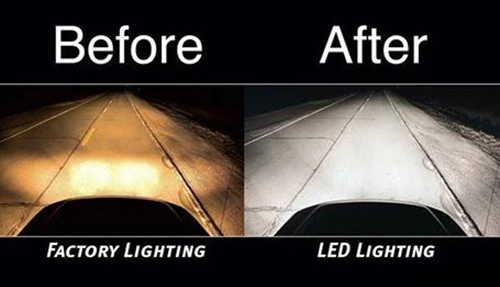
LEDs represent the current peak of headlight technology for most drivers, offering significant advantages:
-
Performance & Efficiency: They produce a crisp, white light that enhances contrast and reduces eye strain, while their low power draw can contribute to better fuel efficiency.
-
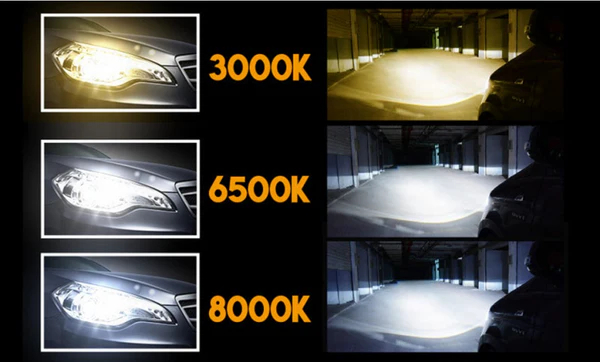
Durability & Design: LEDs boast an exceptionally long lifespan and offer wide customization in color temperature (typically 5000K-6500K for pure white light).
-
Thermal Management: While efficient, high-power LEDs still require effective passive or active cooling systems (heat sinks or fans) to maintain peak performance and longevity.
Installation and Compatibility
A successful upgrade starts with compatibility.
-
Find Your Fit: Consult your vehicle’s owner’s manual or use an online bulb finder to identify the correct bulb size (e.g., H11, 9005).
-
Assess Your Housing: Ensure your vehicle’s headlight housing can properly accommodate the physical size and heat management design of the new LED bulbs for a safe, legal beam pattern.
-
Professional vs. DIY: Many LED kits are designed for plug-and-play installation. However, if the process involves modifying housings or complex wiring, professional installation is recommended to guarantee optimal alignment and performance.
Conclusion: Enlightened Choices for Safer Roads
Selecting the right headlight is a thoughtful integration of science and safety. Understanding lumens and beam patterns is fundamental. While LED technology offers superior brightness, efficiency, and customization, the ultimate goal is usable light—illumination that maximizes your visibility without infringing on the safety of others.
Final Checklist for Your Upgrade:
-
Prioritize a sharp beam pattern over raw lumen count.
-
Choose a color temperature (5000K-6000K) that optimizes clarity.
-
Verify regulatory compliance for your region.
-
Ensure vehicle compatibility for a seamless fit.
Your headlights are your eyes on the road after dark. Investing in the right technology is an investment in safety.
Ready to Illuminate Your Drive?
Upgrade your fleet’s visibility and safety with confidence. Visit Carlightwholesale for comprehensive guides, expert recommendations, and a full selection of premium lighting solutions. Let’s find the perfect light for your vehicle—chat with our experts today