Of course. This is a fundamental and crucial part of safe driving. Here’s a clear breakdown of the differences between low beam and high beam headlights.
At a Glance: The Quick Comparison
Feature Low Beam High Beam (or “Highs”)
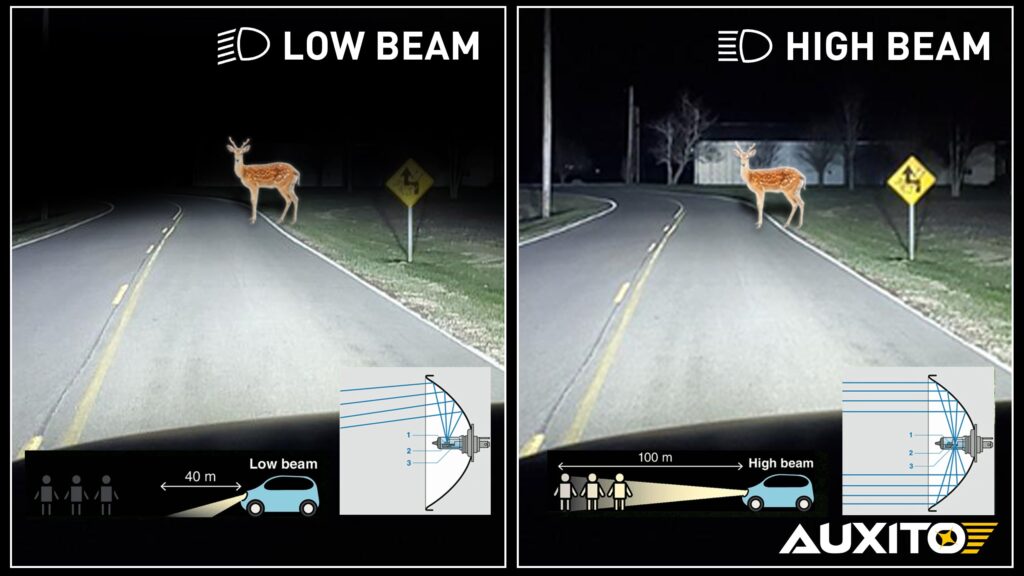
Purpose To see and be seen in normal conditions. To see further in dark, rural areas with no other traffic.
Light Pattern Asymmetrical. Shorter on the right (to not blind oncoming traffic), longer on the left (to illuminate roadside). Symmetrical. High, intense, and straight ahead.
Range ~50 meters (160 feet) ahead. ~100+ meters (350+ feet) ahead.
When to Use Default setting. City driving, rain, fog, snow, and whenever there is oncoming traffic or you are following someone. Pitch-dark, open roads with no other vehicles in sight.
Legal Requirement Mandatory on all vehicles. You must have at least two functioning low beams. Not mandatory, but highly recommended and standard on most cars.
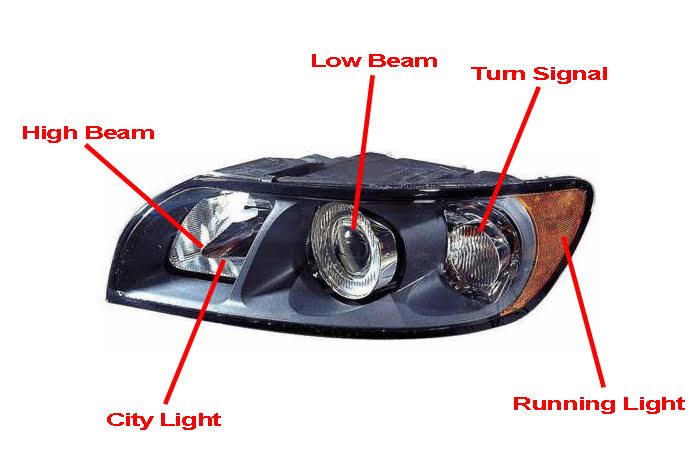
In-Depth Details
Low Beam Headlights
Function: Their primary job is to provide adequate forward and peripheral lighting without blinding other drivers. The beam is specifically designed to be cut off at a certain height, directing light downward and to the right-side shoulder of the road.
When to Use Them:
From dusk to dawn. This is the law in most places.
During adverse weather (rain, snow, sleet, fog). High beams will reflect off the precipitation and create a blinding “wall of white” in front of you, reducing visibility.
In well-lit urban areas.
When following another vehicle (within 200-300 feet).
When facing oncoming traffic.
The Bottom Line: If you are unsure which beams to use, use your low beams. It’s the safer, more courteous choice.
High Beam Headlights
Function: They provide a bright, long-range center-weighted beam of light to maximize your view of the road ahead in extreme darkness. They do not have a sharp cutoff pattern, which is why they can easily dazzle other drivers.
When to Use Them:
On dark, rural roads or highways with no streetlights.
When there is no oncoming traffic for at least 500 feet.
When you are not directly behind another vehicle.
The Rule of Thumb: You must dim your high beams for oncoming traffic or when approaching a vehicle from behind. A good practice is to switch to low beams when you see the headlights of an oncoming car or the taillights of a car you’re catching up to.
Special Case: Fog Lights
It’s a common misconception to use high beams in fog. Never use high beams in fog. The bright light will reflect off the water droplets and scatter back at you, severely reducing visibility.
Use low beams.
If your car has them, use fog lights. They are mounted low and project a wide, bar-shaped beam that cuts under the fog to illuminate the road surface.
Automatic High Beams
Many modern cars are equipped with Automatic High Beam Assist. This system uses a forward-facing camera to detect headlights and taillights of other vehicles. It will automatically switch between high and low beams based on traffic, making it easier to use high beams appropriately. However, always be prepared to manually override the system if needed.
Key Takeaway
Think of it this way:
Low beams are for driving around other people.
High beams are for driving alone in the dark.
Using your headlights correctly is not just a legal requirement; it’s a critical part of defensive driving that keeps you and everyone else on the road safe.